Am I Suffering from Postpartum Depression or Just Exhausted? How to Tell the Difference

What Is the Main Difference Between Postpartum Exhaustion and Postpartum Depression?
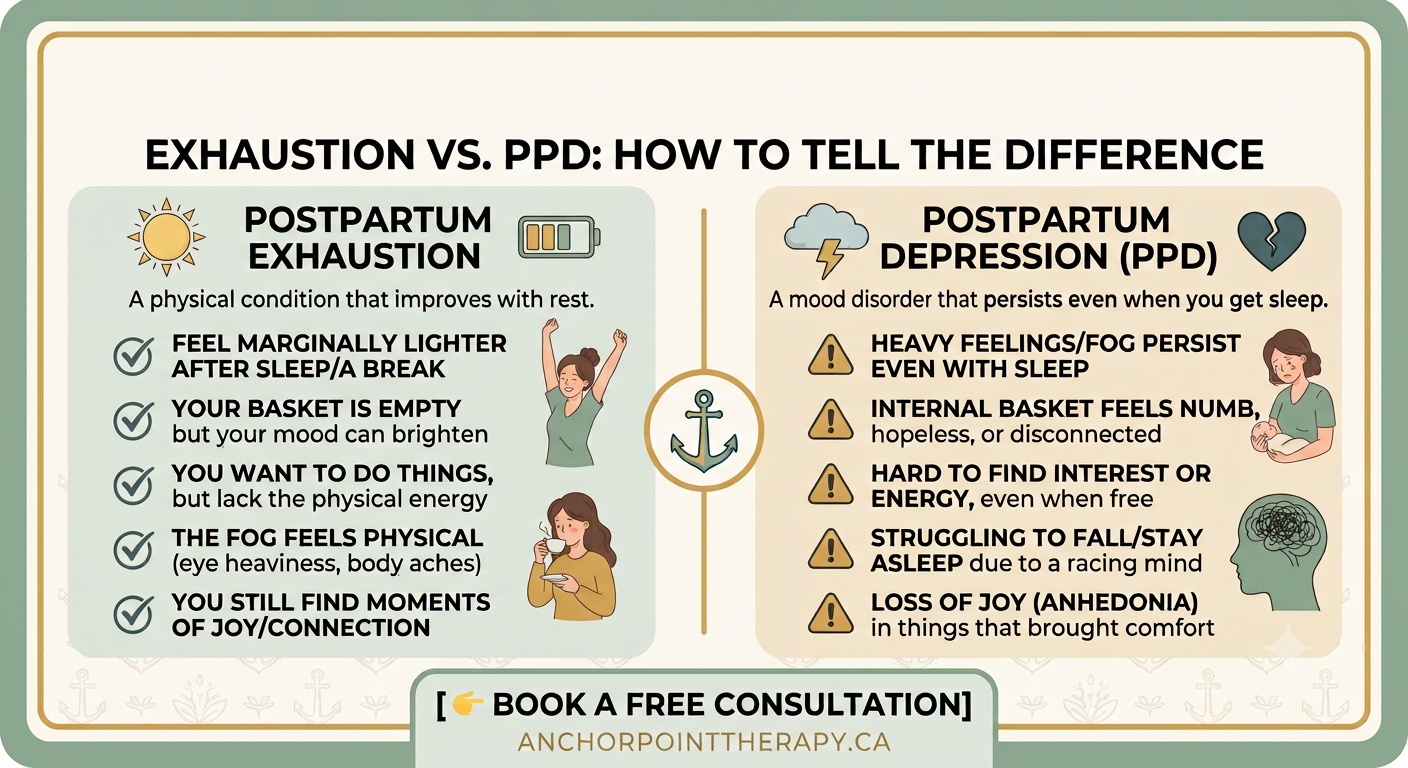
Direct Answer: The key difference between postpartum exhaustion and postpartum depression (PPD) lies in how your body responds to rest. Postpartum exhaustion is a physical condition that improves when you sleep or take a break. Postpartum depression is a perinatal mood disorder characterized by persistent emotional numbness, anxiety, or guilt that does not go away even when you get sleep.
Why Is It So Hard to Tell the Difference Between Postpartum Fatigue and PPD?
When you have a newborn, broken sleep and relentless caretaking become your daily reality. In the middle of a 3:00 AM feeding, it is natural to ask yourself: Is this level of fatigue normal, or am I suffering from Postpartum Depression?
If you’re asking this question, take a deep breath. Experiencing deep tiredness or emotional overwhelm does not mean you’re failing or that you don't love your baby. Because fatigue and depression share overlapping symptoms (like brain fog, physical heaviness, and irritability), it can be tough to distinguish between them when running on empty.
What Are the Normal Symptoms of Postpartum Exhaustion?
Postpartum exhaustion is a physical reaction to major physiological shifts. Your body is recovering from pregnancy and birth, undergoing sudden hormonal drops, and adjusting to round-the-clock infant care.
Improves with Rest: A 2-hour nap or an evening off makes you feel noticeably lighter and more capable.
Intact Emotional Capacity: You still experience moments of joy, humor, or deep connection with your baby and partner.
Physical Energy Deficit: You want to go for a walk or read a book, but your physical body is too tired to execute it.
Clear Cause-and-Effect: Your mood directly correlates with how much sleep or physical help you received that day.
What Are the Signs and Symptoms of Postpartum Depression (PPD)?
Postpartum depression is a clinical mental health condition affecting your nervous system, mood, and capacity for connection during the transition to motherhood.
Unlike general fatigue, PPD alters your emotional baseline and does not lift simply because you caught up on sleep. Seeking specialized perinatal mental health therapy allows you to process these heavy shifts with dedicated support.
Persistent Heavy Baseline: You wake up with a feeling of dread, emptiness, or numbness regardless of how long you slept.
Loss of Joy (Anhedonia): Activities, hobbies, or moments with your baby that used to bring comfort no longer evoke emotion.
Sleep Disruption Despite Fatigue: You feel exhausted, but when the baby finally sleeps, your mind races with hypervigilance or anxiety, keeping you awake.
Intrusive Self-Critical Thoughts: Persistent internal narratives telling you that you are a "bad mother" or that your family would be better off without you.
How Do Postpartum Fatigue and PPD Compare Side-by-Side?
What This Looks Like in Real Life: Sarah's Story
The Exhaustion Example: Sarah gets a 3-hour stretch of sleep while her partner holds the baby. She wakes up, drinks coffee, and feels a wave of relief and energy to go for a stroller walk. This is postpartum fatigue.
The PPD Example: Sarah’s partner takes the baby for the entire morning. Sarah sleeps for 4 solid hours. She wakes up feeling a heavy pit in her stomach, crying in the shower, and wondering why she can’t connect with her baby. This is Postpartum Depression.
Why Do High-Achieving Women Often Miss the Signs of PPD?
Many women who reach out for perinatal therapy are used to managing busy lives, careers, and responsibilities. When PPD hits, high-functioning anxiety often steps in to mask the underlying depression.
Instead of withdrawing, you might find yourself over-functioning: rigidly tracking wake windows, obsessing over feeding schedules, or refusing help because you feel you must do everything perfectly.
Important: Postpartum depression doesn't always look like crying in a dark room. It can look like a mother who appears organized and capable on the outside while experiencing constant anxiety, rage, or emotional numbness inside.
How Can I Regulate My Nervous System When Feeling Overwhelmed Postpartum?
If you suspect you are dealing with PPD or severe burnout, you do not have to wait until you hit a breaking point to get support. Try these three gentle, immediate steps:
Regulate Your Nervous System First: Try 4-7-8 breathing (inhale for 4 seconds, hold for 7, exhale for 8) to signal safety to a hypervigilant body.
Offload One Item from Your Mental Load: Identify one task today to delegate, delay, or drop entirely.
Connect with a Specialized Perinatal Therapist: Work with a professional who understands the unique neurobiology and identity transition of matrescence. When your body is in fight-or-flight, cognitive tools aren't always enough. Utilizing somatic therapy techniques can help gently down-regulate a hypervigilant nervous system.
Frequently Asked Questions About Postpartum Mental Health
Can postpartum depression start months after birth?
Yes. PPD can develop anytime within the first 12 months after giving birth. It often peaks around major developmental shifts, hormone changes, or when returning to work.
Does postpartum depression go away on its own?
While mild "baby blues" usually resolve within 2 to 3 weeks postpartum, clinical postpartum depression typically requires support. Professional therapy, somatic practices, and proper support structures significantly shorten recovery time and prevent long-term burnout.
Can I attend virtual therapy sessions with my baby present?
Absolutely. At Anchor Point Therapy, our virtual perinatal sessions are designed to accommodate your reality. Feeding, soothing, crying, and toddler interruptions are completely normal and welcome.

How Does Anchor Point Therapy Help Mothers Recover from PPD in Ontario?
You don't have to navigate this transition alone. Anchor Point Therapy offers specialized, virtual perinatal mental health counseling for mothers and parents across Ontario.
Whether you’re dealing with postpartum depression, high-functioning anxiety, birth trauma, or the massive identity shift of parenting, our evidence-based, compassionate care is tailored to help you feel like yourself again.
Take the First Step Toward Relief
You don't need to struggle through this phase in isolation.
[👉 Book a Free 15-Minute Consultation with Anchor Point Therapy Today]